


MCO’s Pastorale can be heard on Thursday 10 July 7:30pm and Sunday 13 July 2:30pm at Melbourne Recital Centre and Saturday 12 July 7:30pm at Wyndham Cultural Centre.
Samuel Barber (1910–81)
Adagio for Strings
Samuel Barber was one of the most celebrated American composers of his time. Barbara Heyman in Grove Online said, “Barber pursued, throughout his career, a path marked by a vocally inspired lyricism and a commitment to the tonal language and many of the forms of late 19th-century music”. He composed across many genres with around two-thirds of his works for voice.
The Adagio for Strings is an arrangement of the second movement of his String Quartet Op 11 composed in 1936. The string orchestra version was performed by Arturo Toscanni with the NBC Symphony Orchestra in 1938 and has remained in the repertoire. It has appeared in numerous guises (including the composer’s various arrangements), film music and appeared in television series including the Simpsons, South Park, and Seinfeld.
Doreen Carwithen (1922–2003)
Concerto for Piano and Strings
I. Allegro assai
II. Lento
III. Moderato e deciso ma con moto
The English composer Doreen Carwithen studied piano at the Royal Academy of Music (RAM) from 1941. She won a number of composition prizes at RAM and later became sub-professor of composition there from 1946 to 1948. Adrian Boult performed her overture Odtta with the London Philharmonic Orchestra in 1947. In the same year she was accepted into the J. Arthur Rank Apprenticeship Scheme to study film music, and she subsequently wrote music for more than 30 films.
In August 1952 Carwithen’s Concerto for Piano and Strings, composed between 1946 and 1948, was premiered during the BBC Promenade Season at the Royal Albert Hall, with Iris Loveridge as soloist and the London Philharmonic Orchestra conducted by Trevor Harvey. Andrew Knowles, writing for Faber Music, noted that she was the only female composer represented during that season of concerts.
The concerto is in three movements. The opening Allegro assai is inventive and virtuosic in the piano writing against colourfully rich string writing. The Lento is deeply melancholic, while the finale is marked by its contrasting rhythmic drive and warm lyricism.
Peter Sculthorpe (1929–2014)
Pastorale (from String Quartet No 4)
The Australian composer, Peter Sculthorpe wrote 18 string quartets. The first four were written when he was a student at the Melbourne Conservatorium of Music and the full scores of these works no longer exist. String Quartet No. 4 (1950) is subtitled ‘Recollections of holidays spent in a country village in Tasmania’ and only a few movements have survived.
‘Pastorale’ is a reworking of a movement of the third String Quartet that he reused in the fourth String Quartet. In 2013 the composer arranged the quartet movement for the Tasmanian Symphony Orchestra and the Hush Music Foundation. Sculthorpe wrote in his notes on the work:
This work is based upon a part-song that I wrote in 1947. …The text of the part-song is by Robert Herrick (1591-1674). Called To Meadows, it tells of the passing of summer and the arrival of autumn. The Pastorale contains my personal feelings about autumn. For me, it has always been the most productive of the seasons. I have marked it teneramente, tenderly.
Pyotr Ilyich Tchaikovsky (1840–93)
Serenade for Strings in C major Op 48
I. Pezzo in forma di sonatina. Andante non troppo—Allegro moderato
II. Valse. Moderato. Tempo di Valse
III. Elegia. Larghetto elegiaco
IV. Finale (Tema russo). Andante — Allegro con spirito
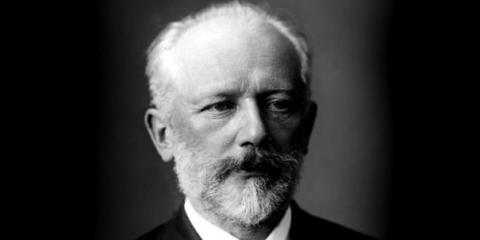
The Russian composer Pyotr Il’yich Tchaikovsky was, according to theorist Boris Asaf′yev, the first composer of a new Russian type: fully professional, who firmly assimilated traditions of Western European symphonic mastery. In a deeply original, personal and national style he united the symphonic thought of Beethoven and Schumann with the work of Glinka. His work stands as a testament to the musical developments in Russia over the latter part of the nineteenth century.
Serenade for Strings Op 48 was composed in 1880 following Tchaikovsky’s short-lived marriage to Antonina Ivanovna Milyukova. The same period saw the composition of the Fourth Symphony, the opera Yevgeny Onegin and the 1812 Overture. The Serenade was first performed at a private concert in December 1880 at the Moscow Conservatory and received its public premiere in October 1881 in St Petersburg followed by a performance in Moscow the next January. It is dedicated to Karl Albrecht, a cellist and colleague of the composer at the Moscow Conservatory.
Tchaikovsky uses the name Serenade to connote a multi-movement form adopted by Mozart. The first movement Pezzo in forma di sonatina is written in the style of a classical sonatina. The Allegro is preceded by a chordal Andante that reappears at the end of the movement and again in the coda of the final movement, providing a sense of unity to the work. The Valse is one of Tchaikovsky’s most enduring melodies. The third movement is a reflective and inward-looking elegy. The Finale with its subtitle ‘Russian theme’, commences with a slow introduction and moves into the spirited Allegro.
The Serenade is an exquisite landmark in the string repertoire. Tchaikovsky’s other major essay for strings is the Souvenir de Florence Op 70 which also follows a four-movement structure.
Program Notes: David Forrest