


MCO’s Homeland can be heard on Saturday 5 April 1:00pm at 75 Reid Street and Sunday 6 April 7:30pm at Riverlinks Westside.
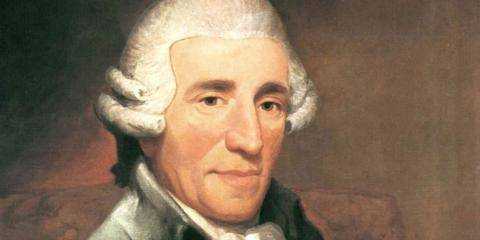
Joseph Haydn (1732–1809)
String Quartet Op 76 No 4 ‘Sunrise’
I. Allegro con spirito
II. Adagio
III. Menuetto: Allegro
IV. Finale: Allegro ma non troppo — Più allegro – Più presto
When Joseph Haydn published Op 76, his last set of six string quartets, in 1797, they reflected over 40 years of experience in quartet writing that always placed him at the vanguard of tradition. This four-decade period of Haydn’s dominance was only upset briefly by Mozart when he dedicated six quartets to Haydn. They also arrived the year before a young Beethoven began his own first foray into the genre.
Written in Haydn’s ‘final’ phase, the quartets are bold and burnished, composed for public performance at the height of his international fame on the heels of his grand concert trips to London. So beloved and enduring are these works that three of them have nicknames bestowed upon them by an adoring public who, at one time, knew each quartet as we might know the stars at night. The one featured in today’s performance, the String Quartet No 4 in B-flat major, was given the English nickname ‘Sunrise’ due to its opening refrains which evoke the slowly rising sun.
By Kai Christiansen (2012 and 2014) earsense.org (edited for brevity)
Aaron Wyatt (b 1983)
Under the Canopy* (world premiere performances)
*Commissioned by Melbourne Chamber Orchestra
Aaron Wyatt is a violist, violinist, conductor, composer, programmer, and academic. Originally from Perth, he spent many years as a regular casual with the West Australian Symphony Orchestra before moving to Melbourne to take up an assistant lecturer position at Monash. A member of the Decibel New Music ensemble, he also develops their animated graphic notation app, the Decibel corePlayer. In 2021 he became the first Indigenous Australian to conduct a state symphony orchestra in concert, and as a composer he has written both traditional and elctro-acoustic works for ensembles like Decibel, Grey Wing, Ensemble Dutala, Enemble Offspring, the West Australian Symphony Orchestra, and the Monash Academy Orchestra.
About Under the Canopy, he writes: So often when people think of the Australian landscape, they think of a sparse and unforgiving terrain: red dirt and spinifex baking under a harsh, midday sun. Under the Canopy instead reflects on the forests near where I have lived in the more southern reaches of the country: both the temperate rainforests in the areas around Melbourne, and the mighty Jarrah and Karri forests back in the southwest. The work opens with a sense of light filtering through the trees, creating a soft glow around us as we bask in awe of the ancient giants that tower overhead. We hear the babbling of a creek in the flowing septuplets that are passed around the quartet, and then the bustle of life supported and protected by the undergrowth in the driving and boisterous middle section. Ultimately though, we are reminded of the fragility of this world and its impermanence, particularly in the face of human impact. An uncertain ending for an uncertain future.
Antonin Dvořák (1841–1901)
String Quartet in F major ‘American’
I. Allegro ma non troppo
II. Lento
III. Molto vivace — Trio
IV. Finale. Vivace ma non troppo
Antonin Dvořák wrote his String Quartet in F major during his sojourn in the American town of Spillville (Iowa state), where he spent his first summer holidays during his tenure at New York’s National Conservatory of Music. The village was inhabited by the descendants of Czech emigrants and reminded him of his summer residence in Bohemia.
In the years post-premiere, this string quartet would occasionally be criticised for its lack of “erudition” and sophistication, but its enormous popularity only served to support Dvořák’s assertion that, “when I wrote this quartet in the Czech community of Spillville in 1893, I wanted to write something for once that was very melodious and straightforward, and dear Papa Haydn kept appearing before my eyes, and that is why it all turned out so simply. And it’s good that it did.” It is now one of the most frequently performed chamber works in the repertoire.
This string quartet is known as the “American”, not only because it was composed on the American continent, but also because it contains several elements typical for original African American and Native American music. Also notable is that the first movement opens with the viola, not the violin, which suggests an autobiographical element, given Dvořák was a competent violist and it could express his arrival in Spillville.
From the “Dvořák encyclopaedia” www.antonin-dvorak.cz (edited for brevity)