


MCO’s Fantasia can be heard on Thursday 1 May 7:30pm and Sunday 4 May 2:30pm at Melbourne Recital Centre.
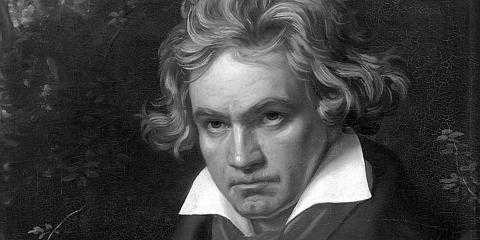
Ludwig van Beethoven (1770–1827)
Egmont Overture (arr Sreten Krstič for string orchestra)
Between October 1809 and June 1810 Ludwig van Beethoven composed Egmont Op 84, the incidental music to Johann Wolfgang von Goethe’s 1787 play. It was first performed on 15 June 1810 and consists of an overture and nine pieces. Around this time, he was working on the fifth piano concerto, as well as ‘Les adieux’ Sonata Op 81a, the ‘Harp’ String Quartet Op 74.
The Overture is marked Sostenuto, ma non troppo – Allegro and has a mood of dark, brooding impulsiveness.
For the commemoration of Beethoven’s 250th birthday Sreten Krstič (b 1953) arranged the First Symphony, the Fifth Symphony and the Egmont Overture for string orchestra. He said in a 2021 interview with Mira Popović: “Arranging occupied me and intrigued me because when I produce an original composition from another composition, I finally create a completely new sound. It’s like, in a way, I’m creating a new work.”
Richard Mills AO (b 1949)
Violin Concerto Sinfonia Sacra. Four Portraits of the Blessed Virgin#
I. At the Message of Archangel Gabriel
II. At the Visit of the Magi
III. At the Via Crucis
IV. Regina Caeli
#World premiere performances co-commissioned by The Robert Salzer Foundation and MCO
Internationally recognised composer Richard Mills AO, Senior Fellow, Faculty of Music, at the University of Melbourne, pursues a diverse career as composer, conductor and artistic director, with an extensive discography of orchestral works including his own compositions.
Richard’s posts have included Artistic Director of Victorian Opera, Artistic Director of West Australian Opera, Artistic Director of the Adelaide Chamber Orchestra, Director of the Australian Music Project for Tasmanian Symphony Orchestra and Musica Viva’s Composer of the Year. He has also been the recipient of an Ian Potter Foundation Fellowship. Richard’s recording of Franz Waxman’s film music with the QSO was awarded the Preis der Deutschen Schallplatten Kritik in 1992.
Most recently Richard has conducted the world premiere of his new opera, Galileo, for Victorian Opera, as well as Glimpses and Dialogues from Galileo at Perth Festival, Jessica Pratt in concert, Elektra, Butterfly Lovers (Mills), La Cenerentola and Salome for Victorian Opera; Voss and Summer of the 17th Doll for State Opera South Australia; The Sound of History with Adelaide Symphony for Adelaide Festival; and the world premiere of his Christmas oratorio Nativity with the Adelaide Symphony Orchestra. His opera Butterfly Lovers was also performed in collaboration with Wild Rice Theatre Company in 2023 in a sold-out season at the Victoria Theatre, Singapore
The composer writes: The work is written for Sophie Rowell and is based on four episodes in the life of the Blessed Virgin and inspired by the representations in visual art by painters Fra Angelico, Andrea di Nerio, Ludovico Carracci, Leonardo da Vinci, Paolo Veronese, and Ambrogio Bergognone. The musical forms are both singularly referential and co-related in a series of complex relationships. The orchestra is treated both as a group of 17 soloists and as an ensemble — presenting various dimensions of colour and perspective that are based on the proportionalities of Renaissance painting. The work is an Australian response to a great tradition — and is thus valid as part of the Australian story.
Frederick Septimus Kelly (1881–1916)
Elegy for String Orchestra (In Memoriam Rupert Brooke)
The Australian composer and pianist Frederick Septimus Kelly has been variously described as an Edwardian sporting legend, as he was a Gold winning Olympic rower in 1908. He studied in Sydney, Eton, Oxford and Frankfurt. In September 1914 he joined the Royal Naval Division, and sailed with Rupert Brooke for the Dardanelles, gaining the Distinguished Service Cross at Gallipoli in January 1916. He was promoted to Lieutenant-Commander and he died on the Somme in 1916.
Elegy In Memoriam Rupert Brooke was composed soon after Brooke’s death in 1915 while Kelly was recuperating from wounds in Alexandria, Egypt. It was first performed at a Memorial Concert to Rupert Brooke in the Rugby School in March 1916, conducted by the composer Frank Bridge.
The work is scored for solo violin, divided string orchestra, and harp. Richard Divall in his 2014 edition of the Elegy writes, “Kelly in his final diary in late 1915 describes the work as suggesting the rustling of the leaves of the grove of olive trees that stand around Brooke’s lone grave on Skyros.”
Ralph Vaughan Williams (1872–1958)
Fantasia on a Theme by Thomas Tallis
Ralph Vaughan Williams was a significant English composer, teacher, writer and conductor of the last century. He was engaged in a wide range of musical activities over his life and his compositions reflect great diversity in style and genre.
The Fantasia was composed in 1910 and performed in that year at Gloucester Cathedral for the Three Choirs Festival; it subsequently underwent some revisions up to 1919. It is written for double string orchestra (1: a full string orchestra, 2: a single desk from each section) and string quartet.
The theme by Thomas Tallis (c1505-1585) is the third mode melody (Why fumeth in fight?) of nine psalms composed in 1567 for Archbishop Parker’s psalter. The melody was included in the English Hymnal which Vaughan Williams was editing at the time.
The work is a multi-sectioned composition. The theme is heard three times in its entirety throughout, and the music develops as motives derived from the theme. The blocks of sounds resonate with call-and-response, echo-like qualities. These combine to form an exquisite mystical statement on English music.
Jessie Montgomery (b 1981)
Strum
Jessie Montgomery is a GRAMMY® Award-winning composer, violinist, and educator whose work interweaves classical music with elements of vernacular music, improvisation, poetry, and social consciousness, making her an acute interpreter of 21st-century American sound and experience. Her profound works have been described as “turbulent, wildly colorful, and exploding with life,” (The Washington Post) and are performed regularly by leading orchestras, ensembles, and soloists around the world. In June 2024, she concluded a three-year appointment as the Chicago Symphony Orchestra’s Mead Composer-in-Residence.
A founding member of PUBLIQuartet and former member of the Catalyst Quartet, Montgomery is a frequent and highly engaged collaborator with performing musicians, composers, choreographers, playwrights, poets, and visual artists alike. At the heart of Montgomery’s work is a deep sense of community enrichment and a desire to create opportunities for young artists and underrepresented composers to broaden audience experiences in classical music spaces.
She serves on the Composition and Music Technology faculty at Northwestern University’s Bienen School of Music.
The composer writes: Strum is the culminating result of several versions of a string quintet I wrote in 2006. It was originally written for the Providence String Quartet and guests of Community MusicWorks Players, then arranged for string quartet in 2008 with several small revisions. In 2012 the piece underwent its final revisions with a rewrite of both the introduction and the ending for the Catalyst Quartet in a performance celebrating the 15th annual Sphinx Competition. The string orchestra arrangement represents the 2012 final version.
Originally conceived for the formation of a cello quintet, the voicing is often spread wide over the ensemble, giving the music an expansive quality of sound. Within Strum I utilized texture motives, layers of rhythmic or harmonic ostinati that string together to form a bed of sound for melodies to weave in and out. The strumming pizzicato serves as a texture motive and the primary driving rhythmic underpinning of the piece. Drawing on American folk idioms and the spirit of dance and movement, the piece has a kind of narrative that begins with fleeting nostalgia and transforms into ecstatic celebration.
Program Notes: David Forrest