


MCO’s Carnival can be heard on Thursday 16 October 8:00pm at Yackandandah Public Hall, Friday 17 October 7:30pm at 75 Reid Street and Saturday 18 October 12:00pm at Narkoojee Winery.
Jakub Jankowski (b 1994)
Octet
I. Syzygy
II. Interlude 1: Dance
III. ‘Walpurgis Night’
IV. Interlude 2: Chorale
V. Finale: Daybreak
Jakub Jankowski is an Adelaide based composer of concert music and holds a Bachelor of Music with Honours in Composition from the Elder Conservatorium of Music. Jakub’s music has been featured at a number of festivals and concert series, including the Adelaide International Cello Festival (2014), the Evenings at Elder Hall Concert Series (2015) the London International Mime Festival (2016), the Musica Viva Festival (2017) and recently the 2017 Musica Viva International Concert Season.
Carl Vine AO approached Jakub as part of the 2017 Musica Viva Festival to produce a response to Mendelssohn’s Octet, and the commission was supported by Australian Executor Trustees Community Program.
Read Chloe Sanger’s ‘A chat with Adelaide composer Jakub Jankowski’ (CutCommon, 18 April 2017) to learn more about this work and his approach to composition.
Jennifer Higdon (b 1962)
Octet Quiet Art*
Jennifer Higdon is one of America’s most acclaimed and most frequently performed living composers. She is a major figure in contemporary Classical music, receiving the 2010 Pulitzer Prize in Music for her Violin Concerto, a 2010 Grammy for her Percussion Concerto, a 2018 Grammy for her Viola Concerto and a 2020 Grammy for her Harp Concerto. In 2018, Higdon received the Nemmers Prize from Northwestern University which is given to contemporary classical composers of exceptional achievement who have significantly influenced the field of composition.
The composer writes: Quiet Art is about the solitude in which artists work, and the passion and consistency that help to create a work of art. This octet version is drawn from my string quartet, Impressions.
Felix Mendelssohn (1809–47)
String Octet in E flat major Op 20
I. Allegro moderato ma con fuoco
II. Andante
III. Scherzo: Allegro leggierissimo
IV. Presto
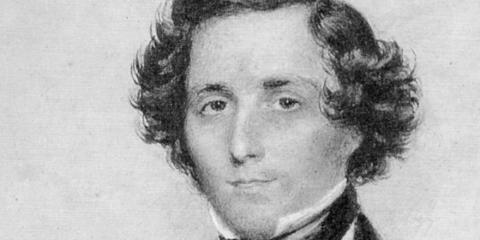
Felix Mendelssohn was one of the leaders of German music in the first half of the nineteenth century. A renowned composer, conductor, pianist and organist, his musical style was influenced by Bach, Mozart, Weber and Beethoven. His music provided a direct link to the past while looking towards the future directions of the times.
Mendelssohn composed the Octet in E flat major Op 20 in 1825 when he was 16 years of age, and presented the autographed score as a birthday present to his violin teacher Eduard Rietz. It has been conjectured that the work was inspired by Louise Spohr’s Double Quartet No 1 in D minor Op 65 composed in the same year. The Octet is considered to be the first work of Mendelssohn’s musical maturity. Prior to this he had completed dozens of major works including symphonies, concertos and operas.
The work is scored for double string quartet (four violins, two violas, two cellos). The opening Allegro is exhilarating with its soaring first violin line. The Andante in a modified sonata form provides with its ethereal beauty a soothing reprise from the opening movement. The Scherzo is marked to be played fast, as light as possible and is inspired by the closing lines of ‘Walpurgisnachtstraum’ (Walpurgis Night’s Dream) of Goethe’s Faust: “Trails of cloud and mist, Brighten from above; Breeze in the trees, and wind in the reeds, And all is scattered”. The Presto finale is a bravura display of technique. It is a combination of a rondo, complex counterpoint and moto perpetuo (constant motion).
On the manuscript Mendelssohn wrote: “The octet must be played by all instruments in symphonic orchestral style. Pianos and fortes must be strictly observed and more strongly emphasized than is usual in pieces of this character.”
By David Forrest
* Yackandandah and 75 Reid St performances only.