


MCO’s Flexible Sky can be heard on Thursday 26 February 7:30pm at Melbourne Recital Centre; Friday 27 February 7:30pm at The Clocktower Centre and Sunday 1 March 2:30pm at Melbourne Recital Centre.
Joe Chindamo OAM (b 1961)
Machiavelli’s Mirror: A Renaissance Suite for String Orchestra*
I. I Medici — Whispers in the Court
II. Sandro Botticelli — Spring Awakes
III. Lucrezia Borgia — Forbidden Grace
IV. Cesare Borgia — Holy Prince of Tyranny
V. Caterina Sforza — Flame of Fortitude
VI. Niccolo Machiavelli — Anatomy of Power
VII. Giovanni Pierluigi da Palestrina — Sacred Harmony
VIII. Leonardo da Vinci — The Art of Wonder
*MCO Premiere Commission, supported by the Robert Salzer Foundation
Joe Chindamo OAM is an Australian composer whose work reveals a distinctive and compelling artistic voice, earning national and international recognition.
In 2026, he is Composer-in-Residence with the Melbourne Symphony Orchestra, which will premiere his large-scale requiem- inspired Are There Any Questions? for orchestra, chorus, and mezzo-soprano in March, and his Flute Concerto in October with soloist Eliza Shephard.
His orchestral works include a Concerto for Orchestra (TSO) and Violin Concerto (TSO) and a Trombone Concerto (ASO), which received its European debut under John Wilson with Peter Moore (LSO) as soloist. The ASO will also premiere his Clarinet Concerto in April 2026.
Chindamo has received commissions from Australia’s leading chamber ensembles, including the Australian Chamber Orchestra, Melbourne Chamber Orchestra, Camerata, the Australian String Quartet, Wilma & Friends, and the Southern Cross Players.
He was awarded the Order of Australia (OAM) in 2022 for service to music and the performing arts.
The composer writes: “Machiavelli’s Mirror, where the Renaissance never ended — it only evolved.
“Written for string orchestra, the suite is composed in the voice of the Renaissance and Baroque, as though that language had never vanished but continued to evolve in secret. It unfolds across eight portraits, each evoking a spirit from that incandescent age — rulers and poets, painters and philosophers, warriors, schemers, patrons, visionaries, and dreamers.
“For though centuries have passed, these figures have never truly gone; their presence still moves among us — in our art, our ambition, and our endless search for meaning. In this music, we engage in conversation with them, while offering a vivid portrayal of their character and spirit.
“A mirror held to beauty, power, and the restless pulse of the human spirit.”
Antonio Vivaldi (1678–1741)
Guitar Concerto in D major RV93
I. Allegro giusto
II. Largo
III. Allegro
Antonio Vivaldi is regarded as one of the most original and influential Italian composers of his generation. Although not an inventor of musical forms, he creatively adapted, refined and expanded them. His output was prodigious, and he wrote across a range of genres including masses, vespers, motets, cantatas, oratorios, operas and the extensive list of instrumental works.
The Concerto in D major RV93 is one of four works for solo lute, two violins, and continuo. It was written in 1730–31. The sheer energy of the outer movements is contrasted with the lyrical slow movement.
Ludwig van Beethoven (1770–1827)
Piano Sonata No 14 in C sharp minor Op 27 No 2 Moonlight (arr string orchestra Jakub Kowalewski)
I. Adagio sostenuto
II. Allegretto
III. Presto agitato
Ludwig van Beethoven composed the Sonata No 14 in C sharp minor Op 27 No 2 in 1802, published in the same year and dedicated it to his pupil Countess Julie “Giulietta” Guicciardi. The work is one of the composer’s most famously enduring compositions. Its title Moonlight was not given by the composer but appeared after his death and is attributed to the poet Ludwig Rellstab. The three movements provide a great sense of contrast.
The arrangement for string orchestra is by the Polish composer Jakub Kowalewski (b 1977) and is from his extensive catalogue of arrangements of keyboard, orchestral and choral works.
Béla Bartók (1881–1945)
Romanian Folk Dances Sz56
I. Jocul cu bâtă / Bot tánc (Stick Dance)
II. Brâul (Sash Dance)
III. Pe loc / Topogó (In One Spot)
IV. Buciumeana / Bucsumí tánc (Dance from Bucsum)
V. Poarga românească / Román polka (Romanian polka)
VI. Mărunțel / Aprózó (Fast Dance)
The Hungarian composer, pianist and ethnomusicologist Béla Bartók composed the Romanian Folk Dances in 1915 and they were first published in 1918. It is one of the composer’s most popular collections of uncomplicated piano arrangements of folk melodies, particularly in the orchestral version he completed in 1917. The titles of each of these short utterances provide a clear description of the work.
Wolfgang Muthspiel (b 1965)
Flexible Sky Redux (new arrangement)
Movement I
Movement II
Movement III
Movement IV
Wolfgang Muthspiel is an internationally acclaimed jazz guitarist, composer, and bandleader known for his lyrical tone and refined harmonic sense. Originally trained in classical violin before turning to guitar in his teens, he later studied at the Berklee College of Music in Boston with Mick Goodrick.
Over the course of his career, Muthspiel has collaborated with leading artists such as Gary Burton, Brad Mehldau, and Brian Blade. As a recording artist and bandleader, he has released numerous albums that blend modern jazz with elements of European classical and contemporary music. Much of his recent work has appeared on ECM Records, highlighting his spacious sound and compositional depth.
Respected for both technical mastery and emotional nuance, Muthspiel remains a central figure in contemporary European jazz.
From Wolfgang Muthspiel: “With Flexible Sky Redux, the composer steps into the long and often fraught tradition of writing for guitar and string orchestra — and quietly reshapes it. Rather than casting the guitar as a fragile voice set against a lush backdrop, this four-movement work reimagines the relationship between soloist and ensemble. The hierarchy of ‘solo’ and ‘accompaniment’ dissolves; what emerges instead is a shifting dialogue in which roles are exchanged, blurred, and at times suspended altogether.
“Distant echoes of composers like Messiaen, Pärt and Stravinsky surface as part of a broader, highly personal language. The composer’s background in jazz subtly informs the harmonic palette and phrasing without overt stylistic quotation.
“Equally central is an intimate understanding of the classical guitar itself. The writing is idiomatic and expressive, exploiting the instrument’s colors and technical possibilities while avoiding gratuitous difficulty. Virtuosity here is purposeful, never ornamental for its own sake.
“At its core, Flexible Sky Redux is less about display than about atmosphere. The composer seeks to create musical spaces—expansive, resonant environments in which performer and listener alike can dwell, even if only briefly. In this sense, the piece offers not just a concerto-like experience, but a shared act of inhabiting sound.”
Matthew Hindson AM (b 1968)
Song and Dance
I. Song
II. Dance
Matthew Hindson AM is one of the most-performed and most-commissioned composers of his generation. His works have been performed by ensembles and orchestras throughout Australia and internationally. He has been the featured composer at national and international festivals, with orchestras and Musica Viva. Matthew’s music has been used for dance including by the Birmingham Royal Ballet, San Francisco Ballet, Ballett Schindowski and the Sydney Dance Company.
Matthew’s music often displays influences of popular music styles within a classical music context, and, as a result, directness and immediacy are common features in the much of his music.
Song and Dance was commissioned in 2006 by The Orchestras of Australia Network with the financial assistance of the Australia Council (now Creative Australia), the Federal Government’s arts funding and advisory body.
The composer writes: “The two movements in this piece — the first a ‘song’, and the second a ‘dance’ — explore the differences in life experience and lifestyle between young adults over a 90 year time span. The first movement refers to 1916, when young men were fighting and dying in European battlefields. Young women of the time were at home, married, possibly with children, with a proscribed role of a ‘housewife’. In contrast is the typical 18–25 year old in 2006 — single, juggling a frenetic career and social life, surrounding by information and technological advancements.”
Program Notes: David Forrest
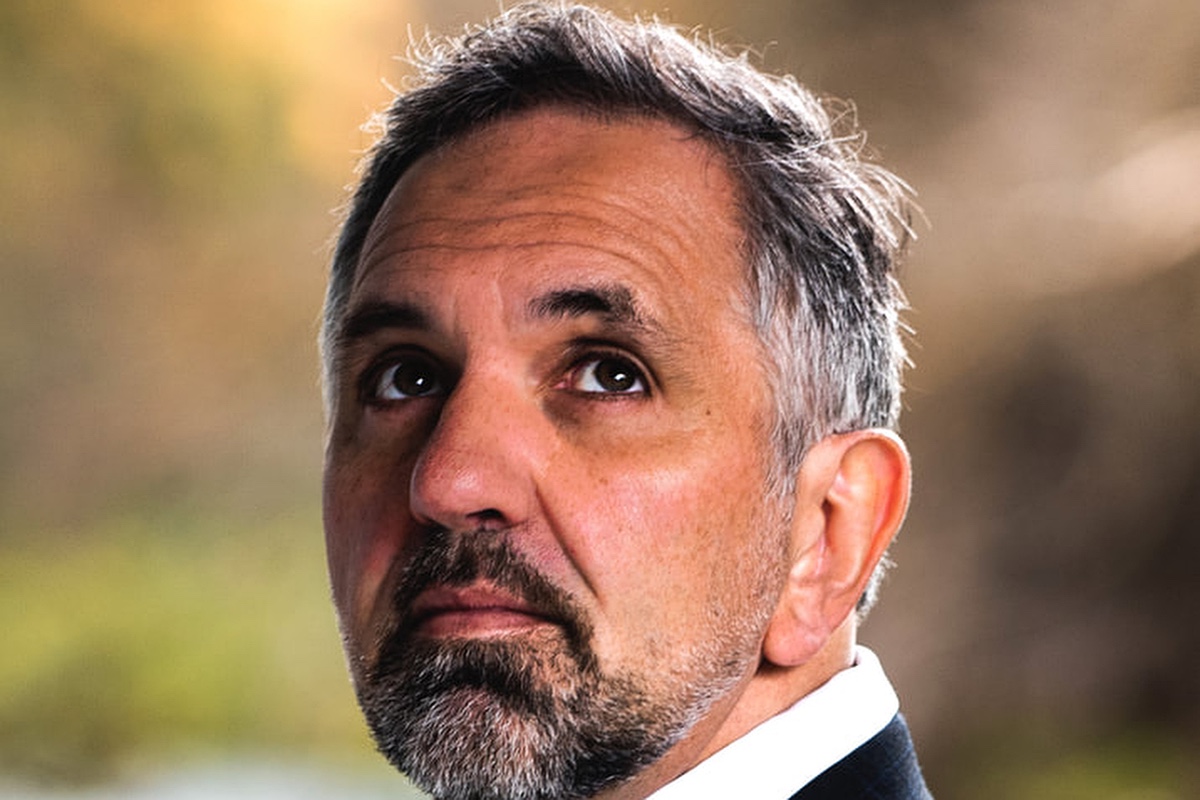
Featured image: Joe Chindamo OAM © Olivia Chindamo