


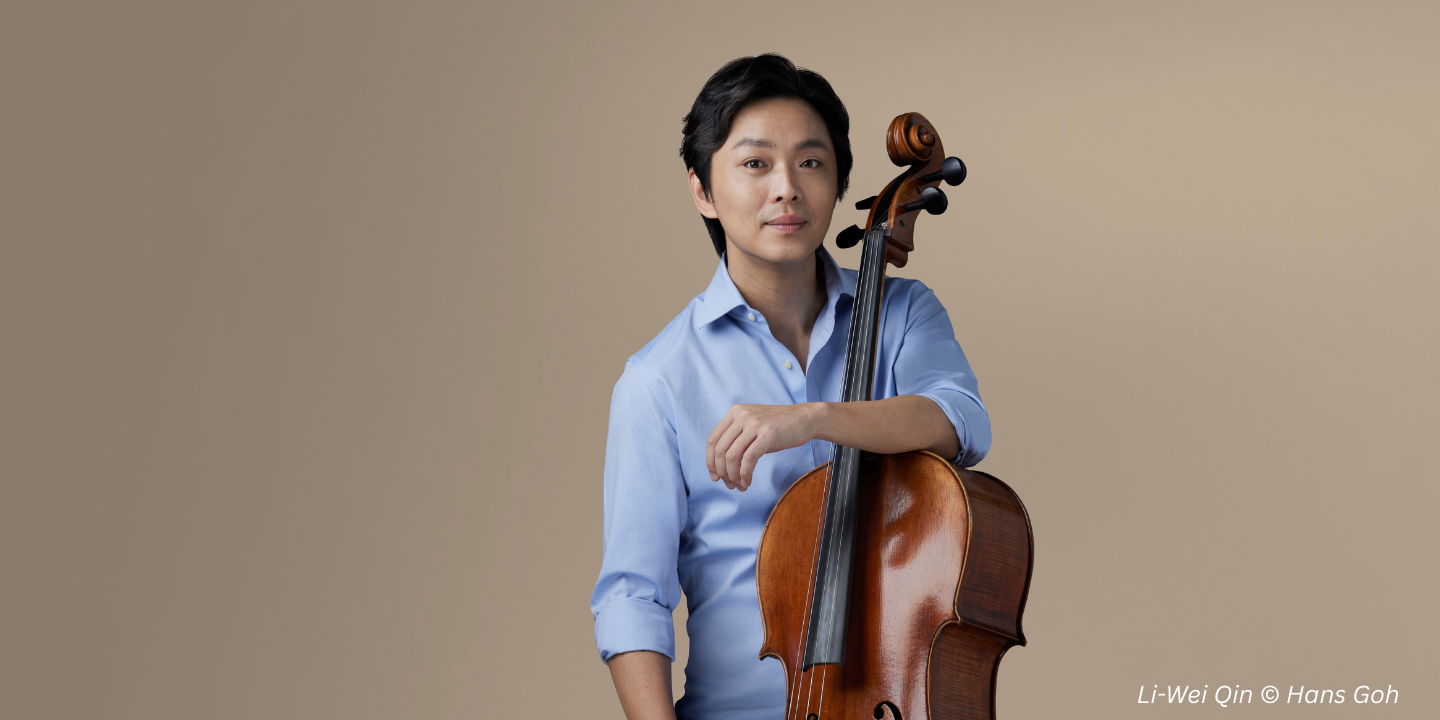
Breathlessly accomplished and lauded the world over, cellist Li-Wei Qin is one of the finest solo performers operating in the global classical music circuit today. Twice a soloist at the BBC Proms, Li-Wei enjoys successful artistic collaborations with many of the world’s great orchestras, venues and festivals.
For the Melbourne Chamber Orchestra’s Musette concerts, Li-Wei returns to the independent ensemble for a glorious showcase exploring the emotional and textural ranges of the cello — and why it’s held such an alluring mystique for so long.
He ponders how he last collaborated with the MCO about five or six years ago, in a performance he warmly regards as, “a very memorable experience, so it’s really nice to be back with them again.”
He voices special enthusiasm at performing alongside Artistic Director Sophie Rowell, whom he has known for at least twenty years, marking the reunion a personal highlight as well as an eagerly anticipated professional moment.
The smaller scale and more intimate nature of a chamber orchestra, as compared with larger orchestras, requires a variation of performance style which Li-Wei connects with at an artistic level.
“In some ways,” he says, “chamber music hits the sweet spot of really combining what an orchestra plays with a chamber space. Ultimately, being a smaller ensemble, we use our ears more! We aren’t entirely relying on a conductor; we have to be much more sensitive.”
This challenge of the absent conductor is one which presents Li-Wei with a musical equation that requires him to be more organically intertwined with the ensemble. It is this heightened level of synchronicity with the surrounding players that affords him the opportunity, even as a soloist, to become more closely a part of the collective players when compared with larger orchestras.
This Musette concert series will serve as a dreamy tribute to the cello’s dynamic shades and figures, with a key work on the program being Haydn’s Cello Concerto No 1 in C major. It was a suggestion of Li-Wei himself, upholding the piece as one perfectly suited to the configurations of a chamber orchestra.
“It’s one of the most exciting and exuberant cello pieces out there!” he shares eagerly. “The manuscript of this concert was only discovered very recently — I think in the 1960s — and it rose to this stature of being one of the most-played cello repertoires in the world.”
Li-Wei first learned to play Haydn’s Cello Concerto at the age of 13, and it has firmly stayed in his heart ever since. Composed of three movements, the slower middle movement is highly “melodic and harmonically attractive” according to Li-Wei, while the final movement’s showcase is sure to steal the show.
He confesses excitedly, “it’s a real, super virtuoso work — both for the orchestra and myself.”
By Liam Heitmann-Ryce-LeMercier